In this article
Reconciling a cash view begins with a narrow question: can the reader explain why two defined observations differ? This is not necessarily the same task as matching individual payment events to a ledger or completing an accounting close. A view-level reconciliation checks the population, time reference, currency convention and underlying observed movements. It helps establish whether the report is ready for interpretation before anyone adds a business narrative.
Freeze the comparison boundary
Identify the two snapshots being compared and retain their scope definitions. Record which accounts and entities are included, the balance meaning, relevant source times and any management adjustments. If one snapshot uses a different population, the reconciliation needs a separate scope bridge. Comparing two totals first and investigating their definitions later can lead to a persuasive explanation of a difference that was never like-for-like.
Check whether either snapshot includes a carry-forward value or an unresolved freshness exception. A late-arriving record can change the view without representing activity that occurred after the earlier report was prepared. That does not make the newer record invalid. It means the explanation needs to distinguish source timing from report timing. Preserve that distinction instead of attributing every newly visible item to the latest period.
Follow a deliberate order
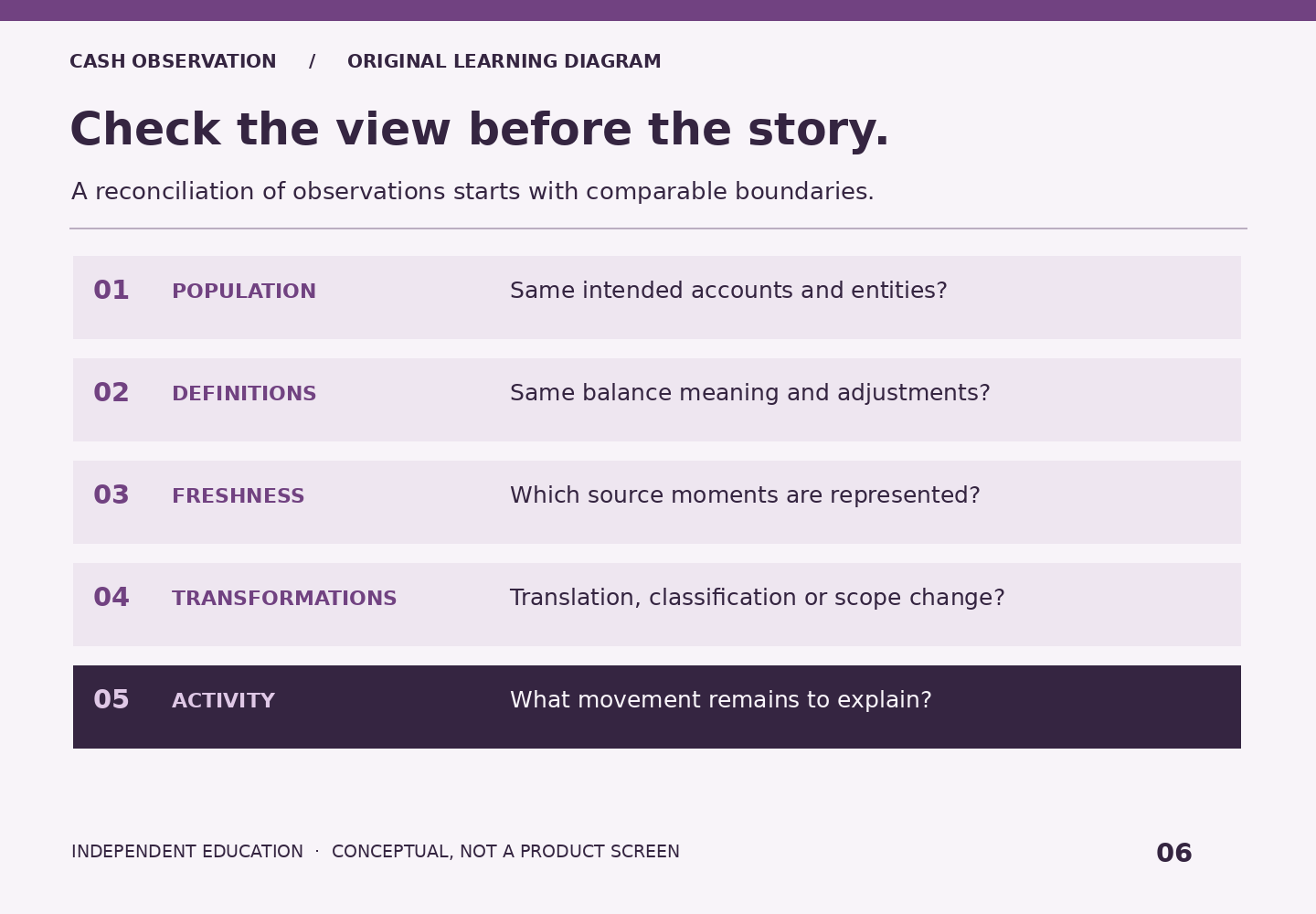
A practical review order is population, definitions, freshness, transformations, then activity. Population asks whether the same intended accounts are present. Definitions asks whether the balance fields mean the same thing. Freshness asks which source moments the observations represent. Transformations include translation, classification and approved adjustments. Only after these checks should the reviewer attribute the remaining difference to underlying activity under the organization’s method.
This order is a diagnostic aid, not a substitute for the accounting team’s required controls. It also does not guarantee that every difference will resolve. An unresolved remainder should stay visible with the evidence reviewed and the owner of the next question. Forcing a balancing adjustment into the report can make the arithmetic close while weakening the explanation. A complete-looking reconciliation is not necessarily a well-supported one.
Test a fictional scope change
Imagine that a fictional group adds an existing account to its daily view. The displayed total rises between snapshots even though the account’s funds were already held before the reporting change. The appropriate bridge identifies the added population. Describing the increase as new operating cash would be misleading. If the report owner can produce a comparable prior snapshot, that may help the analysis, but it should be labeled as a restated comparison rather than the originally published view.
Now imagine that the added account also uses a different source reference time. The scope explanation alone is incomplete. The reviewer must also note the time difference and decide whether the combined comparison supports the intended interpretation. This is why the review order matters: several small reporting choices can interact, and a single convenient label can conceal more than one cause.
Keep a route to evidence
A reconciliation note should refer to controlled source records and documented transformations without copying sensitive details into an unrestricted summary. Use internal references that an authorized reviewer can follow. Record which evidence was checked, what remains unavailable and which assumptions were used. The note should be understandable to someone who did not perform the original review, while respecting the organization’s access and retention rules.
If a difference originates in a source definition or connector behavior, use the approved technical or provider support route with the minimum necessary information. Do not share credentials, account access or an entire data export merely because a support question concerns a cash report. Clarify the precise field, reference time and expected interpretation first. The publication cannot inspect the account or diagnose a production connection.
Publish an explanation with limits
The final narrative should distinguish established drivers from unresolved possibilities. Explain material population or methodology changes before discussing business activity. If the view remains incomplete, state which conclusion cannot yet be supported. An honest limitation lets the responsible team decide whether further review is necessary. The purpose of reconciling the view is to give the next reader a trustworthy boundary for interpretation, rather than to make every report appear final on its first publication.
Scope and source note
This is an original, independent educational method. It is not a Trovata operating manual, an account diagnosis, or a recommendation to move, borrow or invest money. The official source below supplies product context only; the examples and checklists are our own. Verify actual coverage, permissions and configuration with your organization and provider.
Continue the observation
Hand off a cash report without losing its caveats · Freshness is a dimension, not a badge · A scenario is a different question, not a new actual